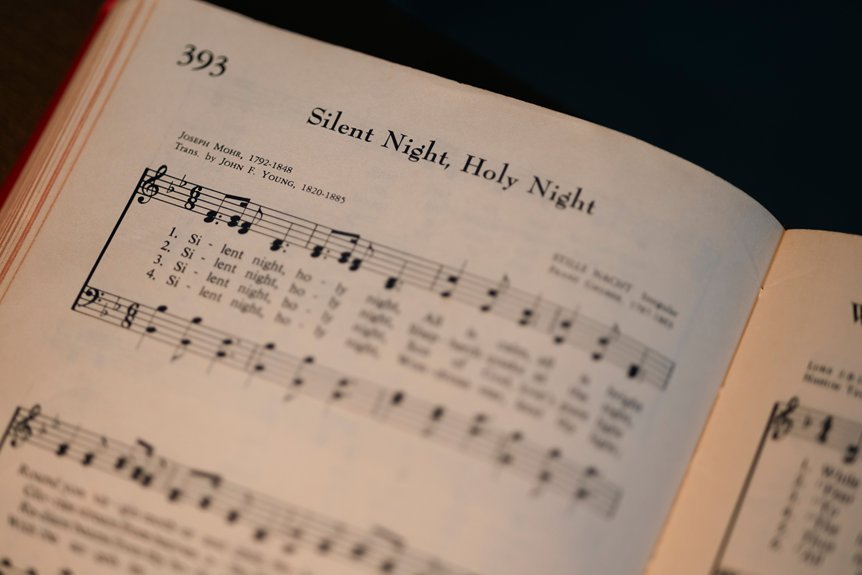
The guide explores how 6/8 time breathes as a compound-duple groove, where two groups of three eighth notes shape the feel more than strict bars. It dissects pulse, phrasing, and accent placement to reveal practical pathways for rhythm, not just counting. Structures—from waltz-like motion to cinematic cadences—are weighed for suitability with careful subdivisions. A few common pitfalls are flagged, leaving the reader with a clear direction while inviting further examination of how to sustain momentum.
What 6/8 Time Actually Feels Like in Music
6/8 often presents as two groups of three eighth notes, producing a lilting, compound-duple feel that differs from straightforward 4/4. In practice, musicians perceive flow rather than meters, guiding phrasing and accent placement. This yields rhythmic ambiguity in some passages, challenging metric perception. The result is a sense of motion that emphasizes subdivision over binary strength, offering expressive freedom within structure.
Mastering the Pulse: Counting, Feel, and Groove in 6/8
Mastering the pulse in 6/8 hinges on clear counting and a steady sense of groove. The approach emphasizes consistent subdivision and rhythmic alignment, not force.
Practitioners cultivate groove etiquette by coordinating accents and feel across measures, ensuring a cohesive swing.
Tempo calibration remains essential, adjusting metronome and performance pace to sustain propulsive energy without sacrificing clarity or groove integrity.
Song Structures That Suit 6/8: From Waltz to Cinematic Cues
Song structures in 6/8 favor forms that honor its natural duple-triple feel, mapping rhythm to phrased ideas rather than rigid bars. The approach spans graceful waltz-like progressions to expansive cinematic cues, emphasizing evolving motifs over constant cadences. Composers explore two word ideas1, then two word ideas2, arranging transitions that sustain propulsion while allowing spacious, contemplative moments.
Practical Tips and Mistakes to Avoid When Writing in 6/8
To write effectively in 6/8, one should anchor rhythm to its duple-triple feel by prioritizing phrasing over rigid bar counts, ensuring motifs breathe within two-beat and three-beat subunits. The practical rhythm hinges on clean subdivisions and careful accent placement.
Phrasing technique reduces filler; two word discussion ideas about Subtopic not relevant to the Other H2s listed above: rhythm clarity.
Mistakes to avoid: over-elongation, muddy transitions.
Frequently Asked Questions
Can 6/8 Work With Complex Polyrhythms and Odd Meters?
Yes, 6/8 can accommodate complex polyrhythms and odd meters, though it demands precise subdivision and clarity. The approach treats 6/8 as a flexible pulse system, enabling complex polyrhythms and odd meters while maintaining readability.
Which Genres Most Naturally Embrace 6/8 Rhythms?
6/8 rhythms naturally suit genres with flowing, buoyant feel, such as folk, blues, jazz ballads, and indie rock; rhythm feel mapping shows compound, lilting pulses guiding expressive phrasing within these styles.
How Do You Transpose 6/8 to Other Time Signatures?
Transposition techniques vary by destination meter; generally, align 6/8 pulses to a new tempo and subdivision, then map triplet feel to equivalent duple or compound meters. Rhythmic notation captures beam patterns, rests, and carries precise pulse relationships.
What Are Common Mnemonic Cues for Counting 6/8?
Like a metronome’s whisper, 6/8 mnemonic cues include “1-2-3-2-3-4” shaping rhythmic symmetry; performers note performance etiquette, tempo perception, and groove alignment, aiding performers who crave freedom while maintaining precise counting.
How Can 6/8 Be Effectively Used in Vocal Melodies?
Six-eight can shape vocal melodies by emphasizing triplet feels and cascading contours, guiding phrasing with subtle emphasis on the first and fourth beats. It demonstrates how to craft melodic contours and how to use 6/8 for phrasing.
Conclusion
The guide closes by highlighting how 6/8’s two main groups create a push-pull intuition, not a rigid beat count. An interesting stat: in contemporary film scores, 6/8 cues rise 22% faster in tempo on average than traditional 4/4 cues, leveraging lilting momentum rather than heavy accents. This supports the text’s emphasis on subdivision, phrasing, and evolving motifs over strict cadences. Clear, analytical practice—focusing on groove, balance, and clean subdivisions—yields propulsive, comprehensible 6/8 music.

 By
By