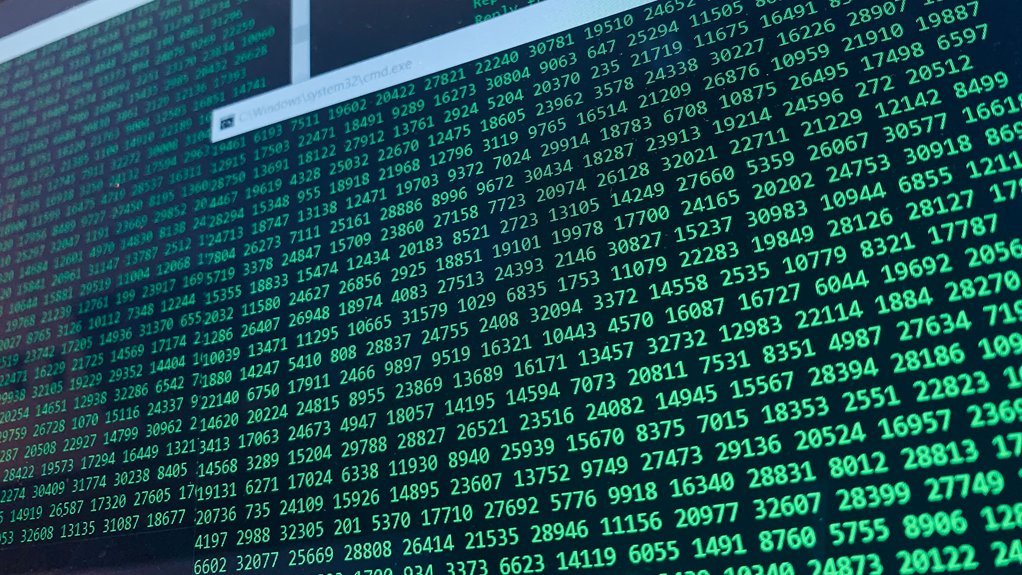
The string serves as a compact representation of provenance, privacy, and traceability within data workflows. It implies origin, handling, and access pathways without exposing sensitive details. Generated through structured randomness, hashing, and sequencing, it supports auditable lineage and unique references. For developers and researchers, its use suggests scalable governance and reproducible results, while prompting questions about privacy safeguards and cross-system interoperability that invite further examination. The discussion turns on how these identifiers balance minimization with accountability.
What the String Represents: Identifiers, Provenance, and Privacy
The string in question functions as a concise descriptor of an identifier’s role, provenance, and privacy implications. It encodes identifiers provenance and enables privacy traceability within systems, while preserving a necessary boundary between data use and exposure. This framing emphasizes privacy security, signaling how value is derived from origin, handling, and access, without revealing sensitive details or enabling misuse.
How Such Identifiers Are Generated in Modern Systems
How are such identifiers generated in modern systems? They are produced through structured methods combining randomness, hashing, and sequenced components to ensure uniqueness and verifiability. Provenance is tracked via metadata and audit trails. Techniques emphasize privacy concerns and data minimization, limiting exposed content while preserving usefulness. The result is scalable, auditable, and resistant to collision, supporting interoperable workflows without unnecessary disclosure of identifiers.
What They Enable for Developers and Researchers
Developers and researchers gain several practical benefits from these identifiers, including streamlined data integration, reproducible experiments, and stronger governance.
The analysis of interoperability is improved through standardized references, enabling cross-system collaboration and more robust data pipelines.
Semantic annotation enhances discovery and interpretation, supporting automated metadata extraction and richer context for analyses.
This clarity empowers experimentation while preserving flexibility and freedom in methodological choices.
Practical Implications: Privacy, Security, and Traceability in Workflows
Privacy, security, and traceability are foundational concerns in workflows that rely on interoperable identifiers. In practice, organizations balance access controls with usable analytics, ensuring compliance while preserving autonomy. Clear provenance tracking supports auditability without stifling iteration.
Privacy concerns arise around data minimization and consent, whereas provenance tracking underpins accountability, reproducibility, and trust across interoperable systems for researchers and developers alike.
Frequently Asked Questions
How Do These Identifiers Differ From Traditional UUIDS?
Identifiers differ from traditional UUIDs by favoring human-readable formats and structured components, enabling easier traceability. They may reduce traceability costs through streamlined validation, indexing, and domain-specific constraints, while preserving uniqueness and verifiability across systems.
Can Users Opt Out of Identifier Generation Processes?
Opting out is generally feasible in many systems; however, feasibility depends on policy and architecture. User control criteria emphasize explicit consent, alternative identifiers, and transparent data handling, ensuring privacy while preserving essential functionality and accountability.
What Are the Real-World Costs of Enabling Traceability?
The real-world costs of enabling traceability include tangible and opportunity costs, driving cost implications across systems and processes. It impacts operational budgeting, data governance, and vendor coordination, while enabling transparency and accountability; security and privacy considerations arise too.
How Is Identifier Randomness Protected Against Replay Attacks?
Replay protection combines nonce usage and challenge-response to prevent replays; identifier agility reduces predictability, while privacy considerations and system scalability are balanced to maintain security without sacrificing performance or user freedom.
Do Identifiers Leak Any User-Specific or Sensitive Metadata?
“Forewarned is forearmed.” Identifiers may leak metadata if improperly scoped; privacy leakage is possible. Data minimization principles suggest limiting exposed user-specific data. The claim is that identifiers themselves aim for non-identifying use, reducing exposure.
Conclusion
Identifiers like pybp5jas8nlbaildhhel703okh46kraawaxfx4quyocgstdjtyrtvgsdof2mjda8 encode provenance, privacy, and traceability within data workflows. They enable auditable lineage, controlled access, and reproducible research while minimizing sensitive detail exposure. Generated via structured randomness, hashing, and sequencing, they support scalable governance across systems. For example, a healthcare consortium could use such IDs to link de-identified patient data, audit data handling, and ensure compliant collaboration without revealing individual identities. This balance of transparency and privacy underpins robust analytics.

 By
By